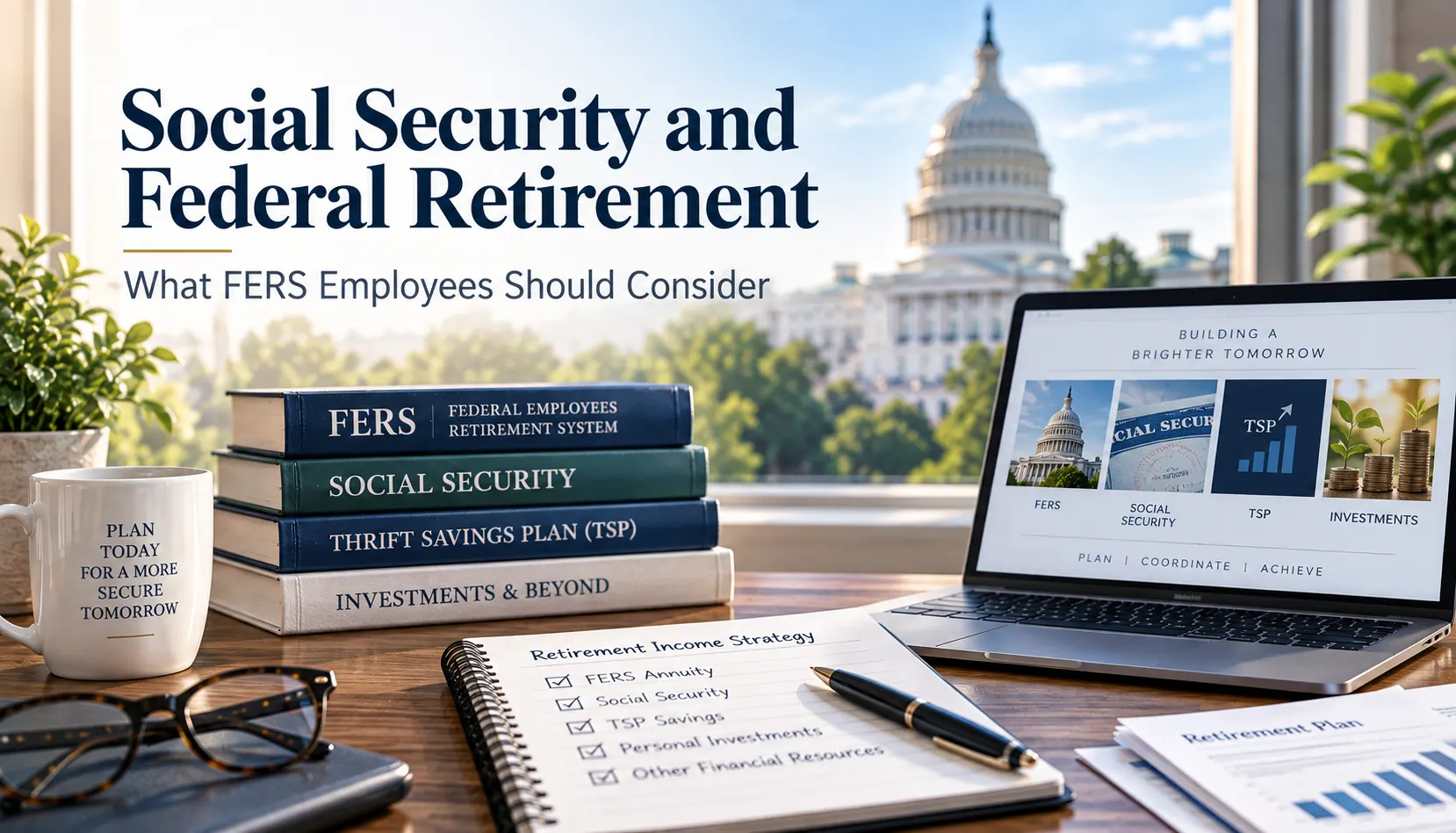
Social Security and Federal Retirement: What FERS Employees Should Consider
For many federal employees covered by the Federal Employees Retirement System (FERS), Social Security may be one part of their overall retirement income.

Federal retirement planning involves more than choosing a retirement date. Your FERS or CSRS pension, Thrift Savings Plan (TSP), Social Security, taxes, insurance benefits, and other financial resources may all play a role in your retirement.
Retirement Benefit Advisor helps federal employees understand these different pieces, review their options, and consider retirement strategies based on their individual goals, timeline, financial circumstances, and income needs.

Better understand the federal retirement benefits available to you and how they may fit into your overall retirement plan.

Review tax considerations that may affect your retirement income and financial decisions before and during retirement.

Consider how your pension, TSP, Social Security, investments, and other resources may work together to support your retirement income needs.
Personalized guidance to help you better understand important financial decisions before and during retirement.

Review your federal benefits, retirement timeline, anticipated income needs, and long-term financial goals as part of a personalized retirement planning process.

Understand how your TSP and other investments may fit within your broader retirement strategy based on your circumstances, objectives, and risk considerations.

Develop a coordinated approach to managing retirement assets, investments, income needs, and other long-term financial priorities.

Bring together your retirement benefits, investments, taxes, insurance considerations, income needs, and financial goals into a more comprehensive financial plan.

Review your life insurance needs and consider how available coverage may fit within your broader financial and retirement planning objectives.

Understand your Social Security options and consider how claiming decisions may coordinate with your federal pension and other sources of retirement income.
Federal retirement benefits can involve many rules, timelines, and financial decisions. We help explain these topics in straightforward terms so you can better understand the choices available to you.
Every federal employee's circumstances are different. Our planning process considers your benefits, goals, retirement timeline, income needs, and broader financial situation.
Federal retirement decisions rarely exist in isolation. We help you consider your pension, TSP, Social Security, taxes, insurance benefits, investments, and other financial resources together.
Our goal is to provide information and guidance that can help you evaluate your options and make informed decisions based on your individual circumstances and retirement objectives.
You have spent years building your federal career and earning valuable retirement benefits.
Understanding how those benefits work can help you prepare for the decisions ahead.
Retirement Benefit Advisor can help you review your federal benefits, understand important retirement considerations, and evaluate strategies based on your individual goals and financial circumstances.
Start by reviewing the federal retirement benefits and financial resources that may apply to you, including FERS or CSRS, TSP, Social Security, and other benefits.
Discuss important retirement decisions and consider how different choices may affect your benefits, retirement income, taxes, and broader financial situation.
Consider a retirement strategy based on your timeline, income needs, financial circumstances, and long-term goals.
Educational resources for federal employees who want to better understand federal retirement benefits, financial planning considerations, and decisions that may arise before and during retirement.

For many federal employees covered by the Federal Employees Retirement System (FERS), Social Security may be one part of their overall retirement income.


Retirement planning isn’t just about knowing how much money you have. It’s about understanding where your retirement income will come from, when you’ll receive it, and how your different benefits may work together.

Retirement is a major transition, and federal employees may have several benefits, requirements, and financial decisions to review before leaving government service.
Common questions about federal retirement benefits, retirement planning, and working with a retirement benefits advisor.
How can Retirement Benefit Advisor help me?
Retirement Benefit Advisor helps federal employees better understand their retirement benefits, review important financial considerations, and evaluate retirement planning options based on their individual circumstances.
Do you work with both FERS and CSRS employees?
We provide retirement planning guidance for federal employees covered by FERS or CSRS. The benefits, rules, and considerations that apply can vary depending on your retirement system and individual circumstances.
When should I start planning for retirement?
There is no single timeline that applies to everyone. Starting earlier may provide more time to understand your benefits, review available options, and prepare for decisions that could affect your retirement.
What retirement benefits should I consider?
Depending on your situation, relevant benefits and financial considerations may include your FERS or CSRS annuity, TSP, Social Security, FEHB, FEGLI or other life insurance coverage, taxes, and additional financial resources.
Can you help me understand my FERS benefits?
Yes. We can help explain the different components of FERS and discuss factors you may want to consider when preparing for retirement. The benefits and options available to you depend on your individual federal service history and circumstances.
How does TSP fit into my retirement plan?
TSP may be an important source of retirement income. When considering your overall retirement strategy, it can be helpful to evaluate your TSP alongside your pension, Social Security, other investments, expected expenses, taxes, and additional income sources.