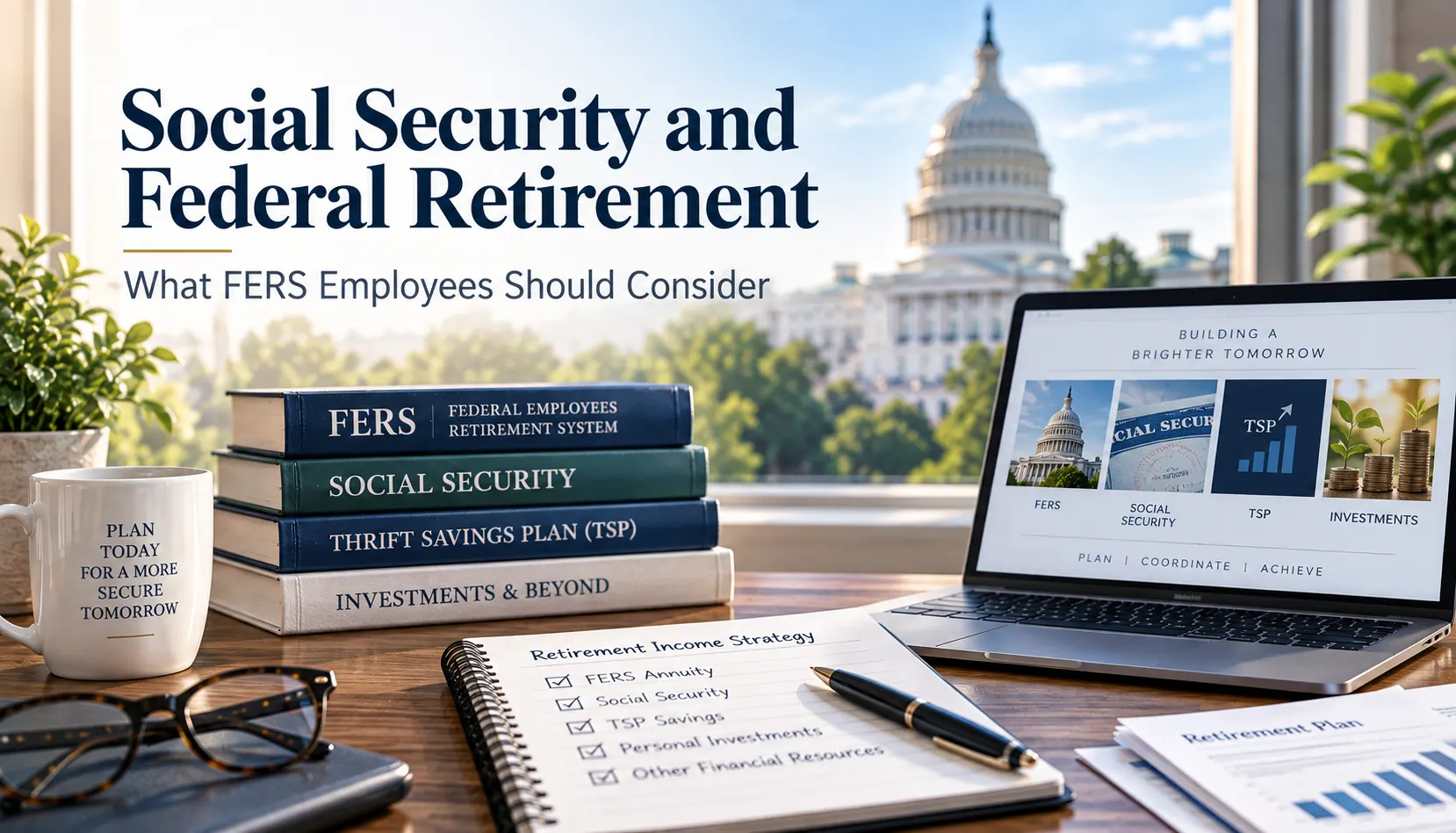

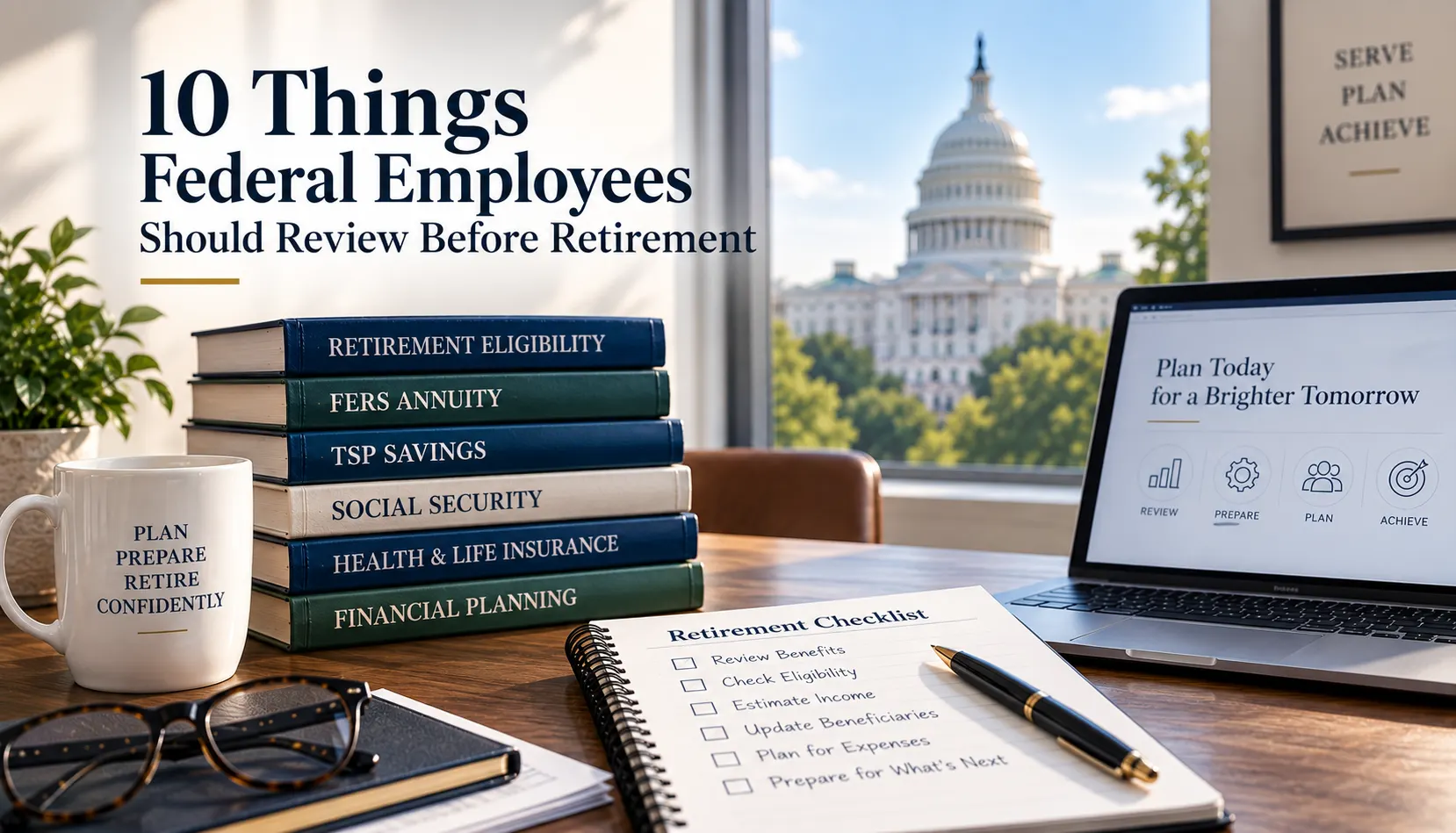
Retirement is a major transition, and federal employees may have several benefits, requirements, and financial decisions to review before leaving government service.
Your retirement preparation can involve much more than selecting a retirement date.
Depending on your situation, you may need to review your retirement eligibility, federal service history, annuity estimate, Thrift Savings Plan (TSP), Social Security, health and life insurance, beneficiary designations, expected expenses, and other financial considerations.
Before selecting a retirement date, understand the eligibility requirements for the type of federal retirement you expect to receive.
Eligibility can depend on several factors, including:
Different retirement provisions can have different age and service requirements.
Before making a final retirement decision, consider confirming your eligibility and service information with your agency’s human resources or benefits office.
Your federal service history can affect your retirement eligibility and the calculation of your retirement benefits.
As you approach retirement, review your official personnel records and confirm that your federal service is documented accurately.
Depending on your employment history, this may include reviewing periods of civilian service, military service, part-time service, leave without pay, or other service that could affect your retirement calculation or eligibility.
If information appears incomplete or incorrect, addressing the issue before retirement may give you additional time to obtain records or work with your agency to resolve questions.
An estimate of your potential federal retirement benefit can help you better understand one source of your expected retirement income.
Your agency’s human resources or benefits office may be able to provide an estimate and explain some of the factors involved in calculating your annuity.
Your actual retirement benefit can depend on your retirement system and individual service history, including factors such as your high-3 average salary, creditable service, age, retirement provision, and applicable elections or reductions.
An annuity estimate should generally be viewed as one part of your broader retirement planning process rather than as a guarantee of the final benefit amount.
Your Thrift Savings Plan may represent a significant portion of your retirement assets.
Before retirement, consider reviewing:
Traditional and Roth balances can have different federal tax treatment.
Investment and withdrawal decisions can also involve taxes, investment risk, income needs, and other financial considerations. The appropriate approach depends on your individual circumstances and objectives.
Before making significant TSP, investment, or tax decisions, consider reviewing the applicable TSP rules and seeking qualified professional guidance when appropriate.
Social Security may be another source of retirement income for eligible FERS employees.
Review your Social Security earnings record and estimated retirement benefits, and understand how the age at which you claim benefits may affect your monthly benefit amount.
Eligible individuals can generally begin Social Security retirement benefits as early as age 62, but claiming before full retirement age generally results in a lower monthly benefit. Delaying beyond full retirement age can increase the monthly benefit, with delayed retirement credits ending at age 70.
There is no single claiming age that is appropriate for everyone.
Consider Social Security alongside your FERS annuity, TSP, other assets, household income, expected expenses, employment plans, and long-term financial needs.
Health insurance can be an important consideration when preparing for retirement.
Federal Employees Health Benefits (FEHB) coverage does not automatically continue into retirement simply because you were enrolled while working.
Generally, to continue FEHB coverage as a retiree, you must retire on an immediate annuity and have been continuously enrolled, or covered as a family member, under FEHB for the five years of service immediately before retirement or for all service since your first opportunity to enroll if that period was less than five years.
Exceptions or different rules may apply in certain circumstances.
Because FEHB eligibility can have a significant impact on retirement planning, consider confirming your individual eligibility with your agency or the appropriate federal source before finalizing your retirement date.
If you are enrolled in Federal Employees’ Group Life Insurance (FEGLI), review what may happen to that coverage when you retire.
Continuing FEGLI into retirement is subject to eligibility requirements.
Generally, this includes retiring on an immediate annuity and having been insured for the five years of service immediately before retirement or for all service during which you were eligible for coverage if that period was less than five years.
The amount and cost of coverage after retirement can also depend on the coverage and reduction elections that apply to you.
Review your available options and confirm your eligibility before making final insurance decisions.
Retirement preparation is also a good time to review beneficiary designations associated with your federal benefits and financial accounts.
Depending on your situation, beneficiary designations may exist for benefits or accounts such as:
Review whether the information on file reflects your current intentions and circumstances.
Beneficiary rules can vary by benefit or account, so review the applicable forms and requirements rather than assuming that one beneficiary designation automatically applies to every federal benefit.
Understanding your benefits is only one side of retirement planning. It can also be useful to estimate what your household may need to spend during retirement.
Consider expenses such as:
Then compare those anticipated expenses with the income and financial resources you may have available.
Depending on your circumstances, those resources could include your FERS or CSRS annuity, Social Security, TSP, other retirement accounts, savings, investments, employment income, or other assets.
These amounts and expenses can change over time, so retirement-income planning may require periodic review rather than a one-time calculation.
Retirement can be easier to evaluate when you treat it as a process rather than a single date.
Consider creating a timeline for important benefit and administrative decisions leading up to retirement.
Several Years Before Retirement
Review your retirement eligibility, service history, FEHB and FEGLI requirements, TSP, Social Security, other savings, and expected retirement needs.
This can provide time to identify missing records or benefit questions before your planned retirement date approaches.
Within One Year of Retirement
Consider confirming your eligibility and service history, obtaining benefit estimates, reviewing your insurance coverage, evaluating your retirement income sources, and becoming familiar with your agency’s retirement application process.
As Your Retirement Date Approaches
Review your retirement paperwork, benefit elections, beneficiary information, insurance decisions, expected income sources, and any remaining documentation required by your agency.
Specific procedures and recommended timelines can vary, so follow the current instructions provided by your agency and the Office of Personnel Management (OPM).
Federal retirement planning involves more than calculating a pension or choosing your last day of work.
Your federal annuity, TSP, Social Security, FEHB, FEGLI, other assets, taxes, expected expenses, and personal goals may all affect your retirement decisions.
Reviewing these areas before retirement can help you identify questions, understand the benefits that may apply to you, and prepare for important administrative and financial decisions.
Because federal retirement rules and individual circumstances vary, confirm benefit eligibility and administrative requirements with your agency, OPM, TSP, Social Security Administration, or other appropriate official source before making decisions based on your expected benefits.
There is no single timeline that applies to every employee. Beginning your review several years before your expected retirement date may provide more time to verify your service history, understand benefit and insurance requirements, review your TSP and Social Security information, and address questions before submitting your retirement application.
Depending on your circumstances, consider reviewing your official personnel and service records, retirement estimates, TSP information, Social Security earnings record and benefit estimate, FEHB and FEGLI coverage, beneficiary designations, and other documents relevant to your benefits. Your agency’s HR or benefits office can help identify records required for your retirement application.
Eligible federal employees may be able to continue FEHB coverage into retirement. Generally, you must retire on an immediate annuity and satisfy the applicable five-year enrollment or coverage requirement, although exceptions may apply in certain circumstances. Confirm your individual eligibility before retirement.
Yes. Reviewing your TSP can help you understand your balance, Traditional and Roth funds, investment allocation, beneficiary information, available withdrawal options, and how your TSP may fit within your broader retirement finances. Investment, withdrawal, and tax decisions should be evaluated based on your individual circumstances.
Your retirement date may affect your eligibility, annuity commencement, years of creditable service, insurance eligibility, and other aspects of your retirement. Consider your retirement provision, service history, FERS or CSRS benefits, TSP, Social Security, FEHB and FEGLI eligibility, expected expenses, and personal circumstances before making a final decision.